Morbidity & Mortality Conference
Department of Internal Medicine · June 2026

A diagnosis hiding
in plain sight.

A Morbidity and Mortality case presentation.

Samuel Edusa, MDPGY-2 · Internal Medicine
Ornob Rahman, MDPGY-2 · Internal Medicine
Front Matter
Front Matter

Disclosures

01The presenters have no financial relationships or conflicts of interest to disclose.
Front Matter
Front Matter

Purpose of M&M

01Promote professionalism and ethical integrity in assessing and improving patient care.
02Encourage transparency and open discussion about medical error and system gaps.
03Identify concrete opportunities to improve clinical care and the systems around it.
Roadmap
Roadmap

Outline

1
Case Presentation
History, exam, data, management & hospital course
2
Imaging Review
Serial chest radiographs, the central finding
3
Discussion
The evidence and management critique
4
Analysis
Contributing factors, Swiss-cheese & safety classification
5
Matrix & Action Plan
Healthcare matrix and SMART action plan

Part 01 / 05

Case

A 65-year-old man with metastatic lung cancer and a malignant pleural effusion.

Case Presentation
Case Presentation

History — Chief Complaint & HPI

Chief Complaint

Shortness of breath and chest pain

Onset ~2 weeks of progressive dyspnea and central chest discomfort.

Review of Systems

Otherwise negative. Denied hemoptysis, hematemesis, melena, fever, or abdominal pain.

History of Present Illness
  • 65M with metastatic lung adenocarcinoma (liver, bone, brain), HTN, prior PE, and prior malignant pleural effusion s/p thoracentesis.
  • Noncompliant with oncologic care. Last seen by oncology 10/2025, no ongoing treatment.
  • Presented to ED 5/15/2026 with dyspnea and chest discomfort. CXR showed complete opacification of the left hemithorax.
  • CT surgery consulted. Left Fuhrman pigtail chest tube placed in ED, returning bloody pleural fluid (546,897 RBCs). Admitted to IM teaching service.
Case Presentation
Case Presentation

History — PMH · SH · FH · Medications

Past Medical History
  • Metastatic lung adenocarcinoma (liver, bone, brain)
  • Hypertension
  • Prior pulmonary embolism
  • Left lower-extremity DVT
  • Recurrent malignant pleural effusion s/p thoracentesis
Social History
  • Lives with his brother
  • Former cigarette smoker
  • Alcohol / drug use not on file
  • Functionally independent at baseline
Surgical · Family
  • Port-A-Cath placement 9/2025
  • No other surgical history on file
  • Family history non-contributory
Home Meds (noncompliant)
  • amlodipine, metoprolol (HTN)
  • apixaban, self-discontinued 12/2025
  • folic acid, ondansetron
  • tramadol, hydrocodone–acetaminophen (pain)
Case Presentation
Case Presentation

Physical Examination

BP
130/81
mmHg
HR
96
bpm
Temp
36.3
°C
RR
22
/min
SpO₂
92
% RA
BMI
23.5
kg/m²
GeneralIll-appearing, thin. Alert, in no acute distress.
PulmonaryAbsent breath sounds over entire left hemithorax. Left chest tube in place.
CardiovascularTachycardic, regular rhythm. Right-sided infusion port.
AbdomenSoft, non-tender, non-distended. Normal bowel sounds. No guarding.
Neuro / PsychAlert & oriented ×3, non-focal. Mental status at baseline.
Case Presentation
Case Presentation

Data — Labs & Studies

WBC
18.2
10³/µL · elevated
Hgb
8.4
↓ from 13.4
Cr
1.00
mg/dL · baseline
Pleural RBC
546,897
bloody / exudative
Imaging
  • ED chest x-ray: new complete opacification of the left hemithorax, extensive pleural fluid.
  • Post-chest-tube CXR (5/15, 19:48): "probable left pleural effusion. No pneumothorax."
Other Studies
  • LLE venous Doppler: occlusive DVT, left common femoral to popliteal vein.
  • EKG: QTc prolongation.
  • SIRS criteria met: tachycardia, tachypnea, WBC 18.2.
Case Presentation
Case Presentation

Admitting Diagnoses

1Malignant pleural effusion with left lung collapse
2Metastatic lung adenocarcinoma (liver, bone, brain)
3SIRS, suspected infection / community-acquired pneumonia
4Acute blood-loss anemia
5LLE DVT with history of PE, unable to anticoagulate (bloody effusion)
6AKI · QTc prolongation · Essential hypertension
Case Presentation
Case Presentation

Initial Management

Disposition · Consults
  • Admitted to IM teaching service
  • Cardiothoracic surgery + vascular consulted
  • Daily chest x-rays obtained with chest tube in place
Respiratory · Pleural
  • Left Fuhrman chest tube placed to suction
  • Monitored chest-tube output
  • Levalbuterol nebs given
Infection · SIRS
  • Empiric vancomycin + piperacillin-tazobactam started
  • Blood, urine & pleural cultures obtained
  • MRSA nares screen obtained
Heme · Supportive
  • Held anticoagulation for bloody effusion and blood-loss anemia
  • Serial CBCs, IV fluids, monitored CMP
  • Held QT-prolonging meds. Multimodal pain control
Case Presentation
Case Presentation · Hospital Course

Hospital Course — HD 1 to 3

HD 15/15
  • Admitted. Left Fuhrman chest tube placed in ED for malignant effusion
  • Occlusive left LE DVT identified, anticoagulation held (bloody effusion)
  • Post-chest-tube CXR: "No pneumothorax"
HD 25/16
  • ~3,700 mL drained, left lung partially re-expands
  • Repeat CXR: moderate left hydropneumothorax now present, with a small air leak
  • Broad-spectrum antibiotics (vancomycin + Zosyn) continued
HD 35/17
  • Stable hydropneumothorax, persistent left basilar opacity
  • Symptoms improved, dyspnea better, comfortable
  • Anticoagulation (apixaban) restarted: 48 h post-tube, Hgb stable
Case Presentation
Case Presentation · Hospital Course

Hospital Course — HD 4 to 5

HD 45/18
  • Cardiothoracic surgery removes the chest tube (no air leak, lung will not re-expand)
  • Radiology calls re: FREE INTRAPERITONEAL AIR on the AM chest x-ray
  • Left lateral decubitus film confirms a large pneumoperitoneum
  • Patient appears well, sitting up eating breakfast, benign abdomen, no pain
  • Read as "low concern for acute process" → serial abdominal exams, CT ordered
HD 55/19
  • CT abd/pelvis: perforated duodenal ulcer with free air, suspected malignant etiology
  • General surgery consulted for perforated viscus
  • To OR: exploratory laparotomy, antrectomy + retrocolic gastrojejunostomy, Graham patch
  • Large wide-mouth duodenal perforation. EBL 25 mL. NG tube + JP drain placed
Part 02 / 05

Imaging Review

A serial review of the imaging during the hospital course.

Imaging Review
Imaging Review · 1 of 2

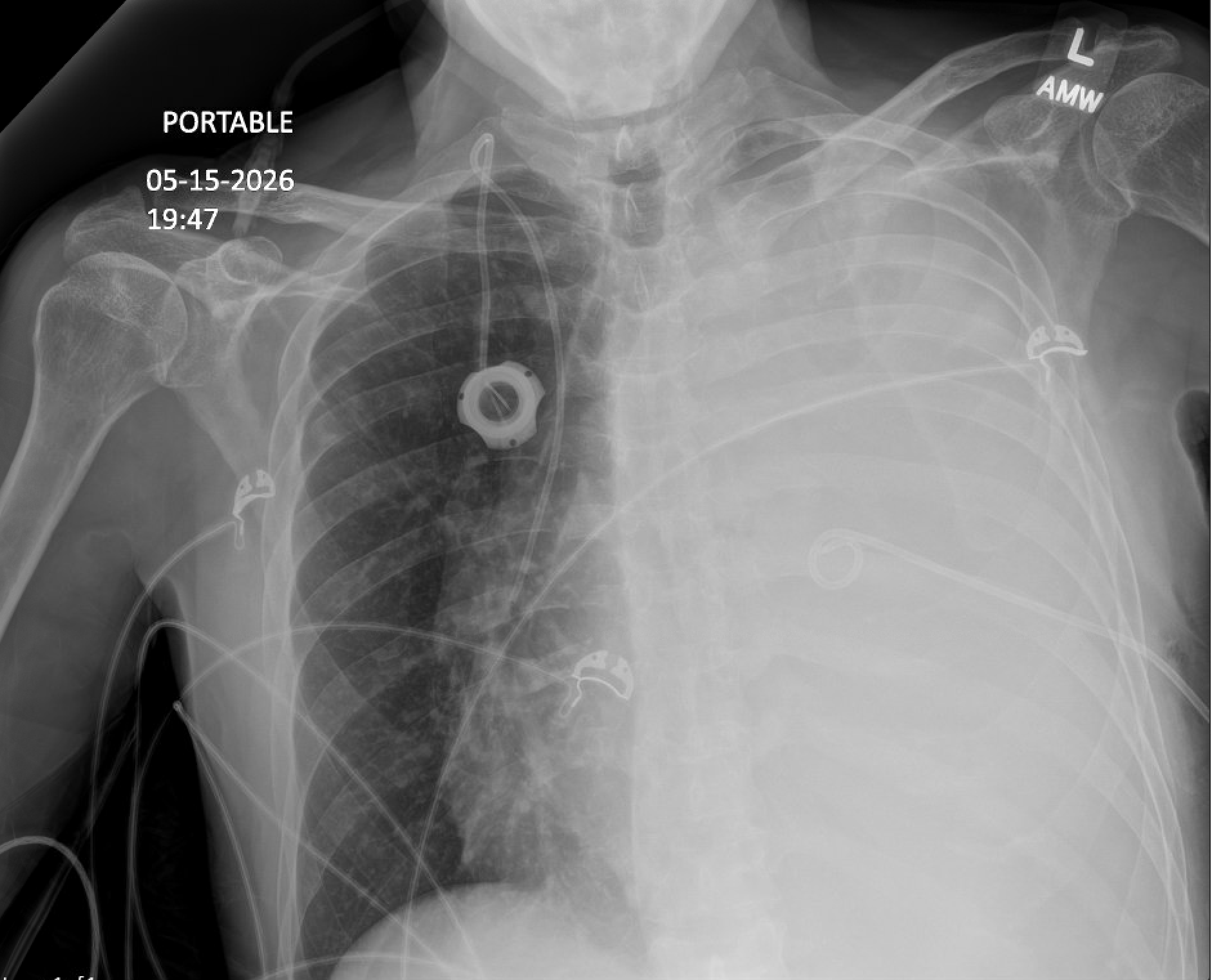
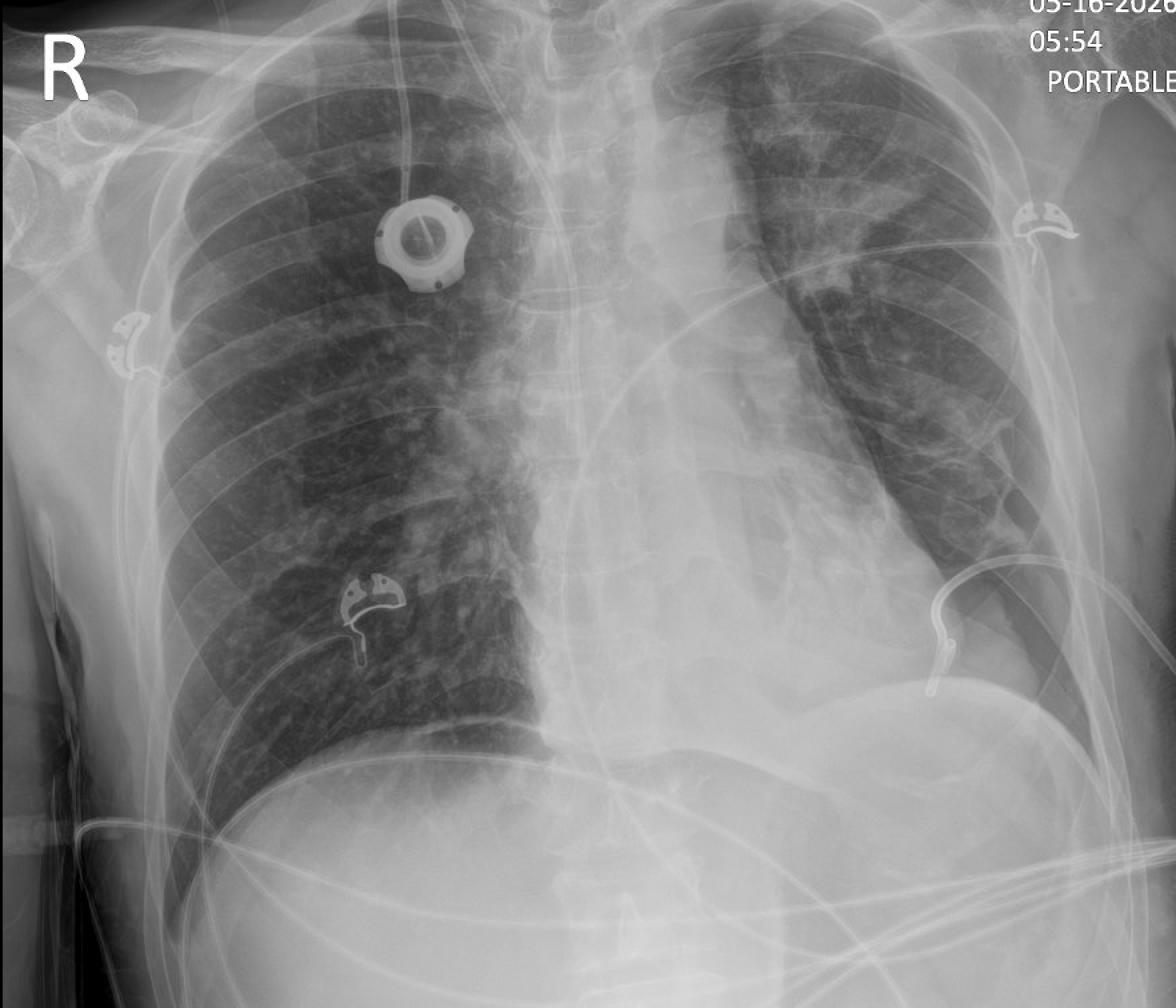
Serial Chest Radiographs — HD 1 & 2 · 5/15 → 5/16
Chest radiograph 5/15
5/15HD 1
White-out of the left hemithorax from a large malignant effusion.
Chest radiograph 5/16
5/16HD 2
Lung re-expands after drainage → new hydropneumothorax.
Imaging Review
Imaging Review · 2 of 2

Serial Chest Radiographs — HD 3 & 4 · 5/17 → 5/18
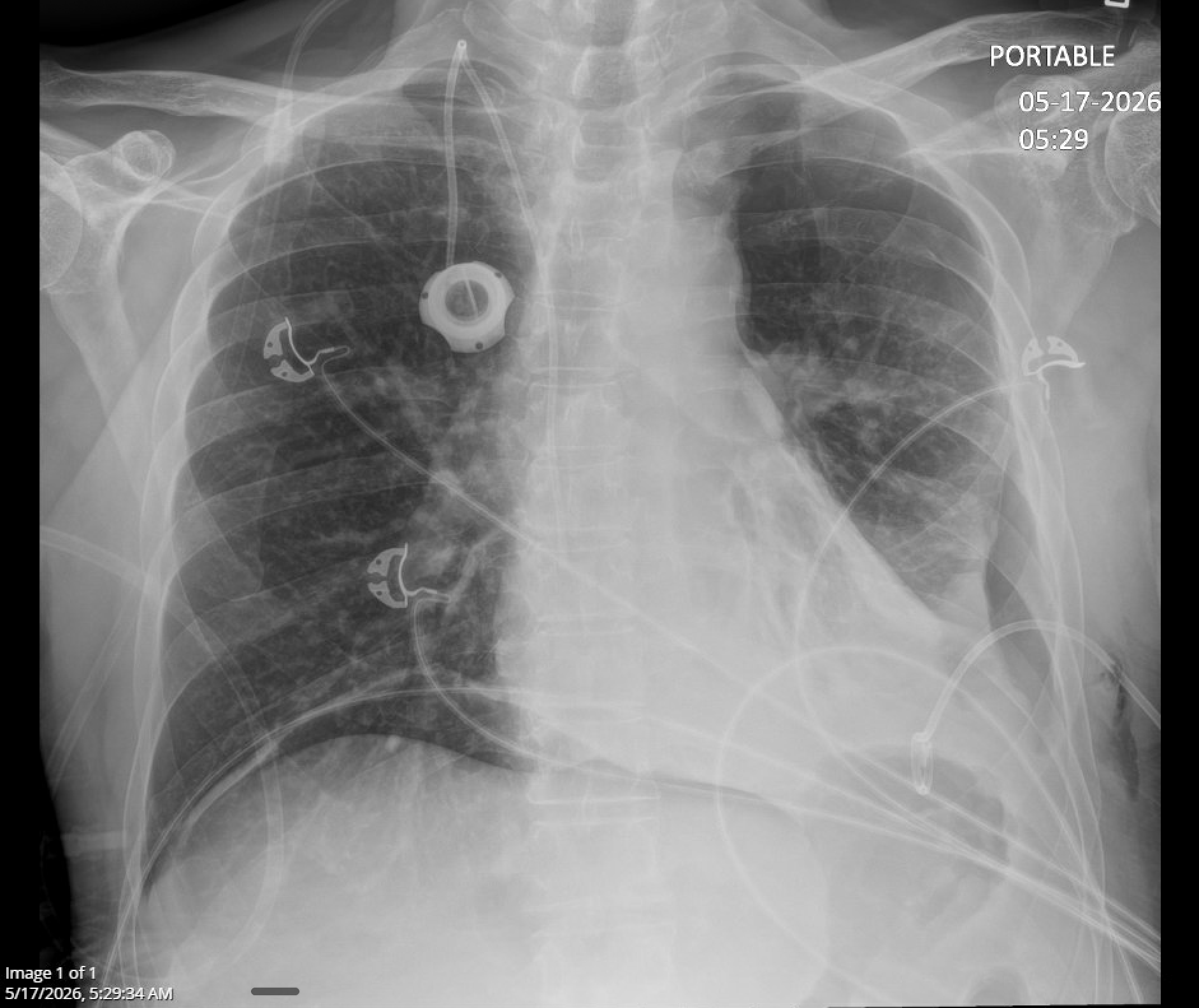
Chest radiograph 5/17
5/17HD 3
Stable hydropneumothorax, persistent left basilar opacity.
Chest radiograph 5/18
5/18HD 4
Overt free air under the diaphragm.
Imaging Review
Imaging Review

5/18 — The Finding That Was Called

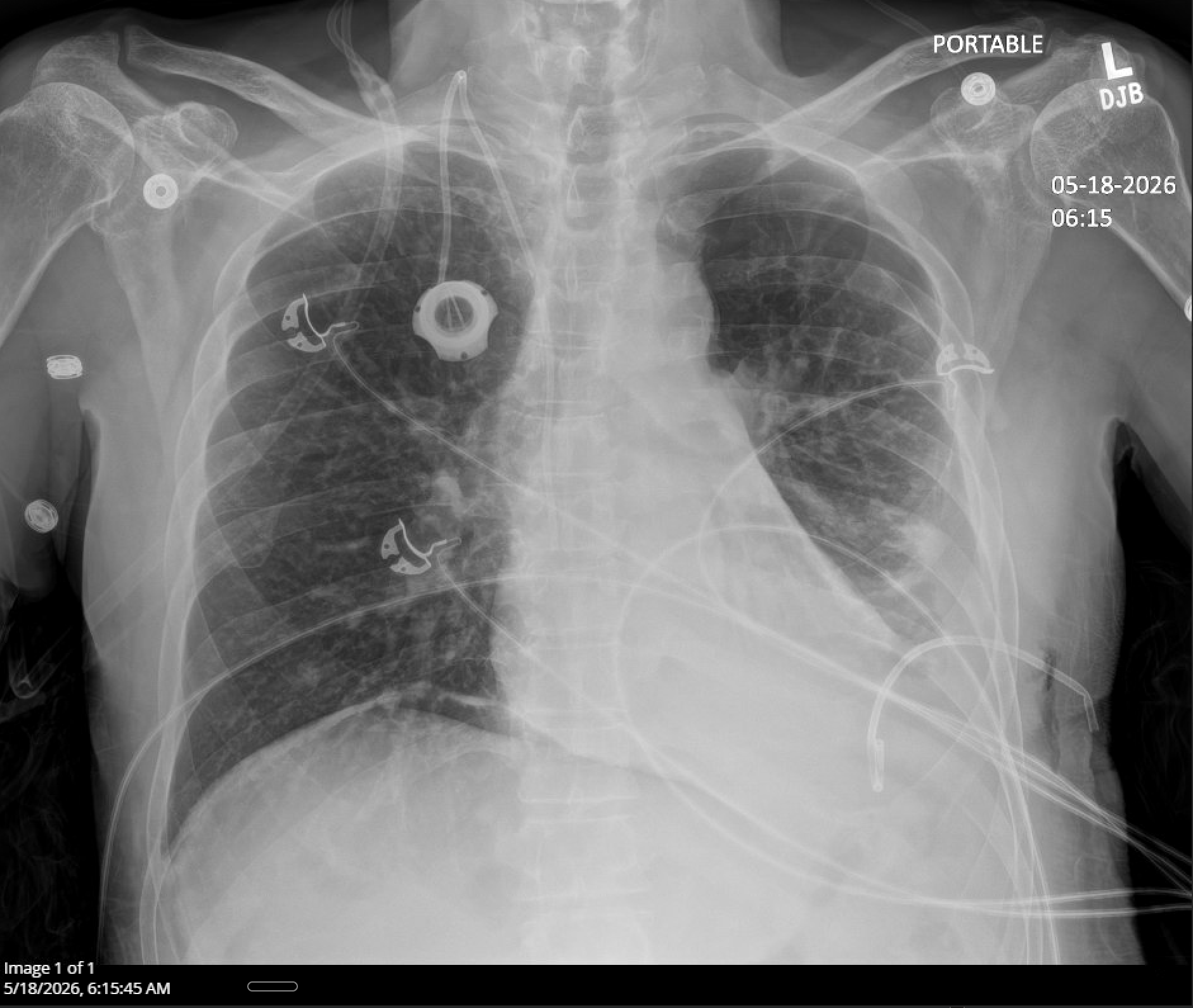
Chest radiograph 5/18 showing free air PORTABLE · 05-18-2026
What the film shows
  • Crescentic lucency outlining both hemidiaphragms, indicating free intraperitoneal air.
  • Persistent moderate left hydropneumothorax above it.
  • Radiology read: "abnormal upper-abdominal appearance suggests free intraperitoneal air," confirmed on left lateral decubitus.

This is the film that triggered the surgical work-up, on hospital day 4.

Imaging Review
Imaging Review

CT Confirmation — Hospital Day 5

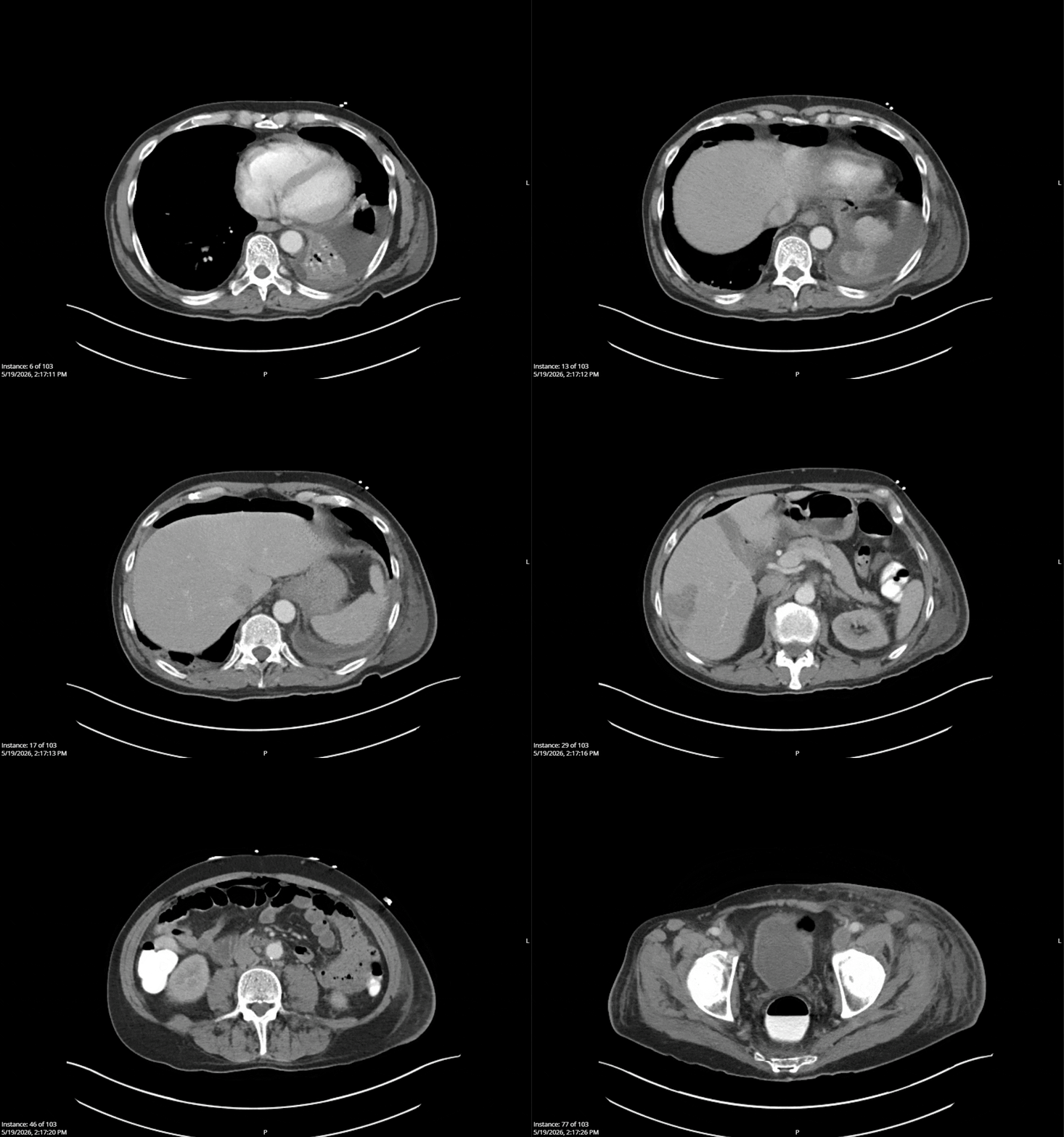
CT abdomen/pelvis cine loop, 5/19 CT ABD/PELVIS · 05-19-2026 Cine · 103

CT Abdomen/Pelvis W Contrast · 05/19/2026 14:48

Impression

Perforated duodenal ulcer of high concern, with new free air and free fluid in the upper abdomen. General surgery consult recommended now.

Key findings
  • Free air and free fluid concentrated in the upper abdomen, with gas tracking along the falciform ligament.
  • Fat stranding around the duodenal bulb, plus an abnormal pattern at the peripyloric region with adjacent gas.
  • Inflammatory change in the gallbladder, felt to be secondary to the active process.
Known / secondary
  • Left hydropneumothorax with partial LLL collapse. Known hepatic metastasis (5.4 cm) and right iliac/sacral lesion. Extensive LLE DVT into the left external iliac vein.

Documented at scan: patient reported no abdominal pain. The benign exam persisted to the moment of diagnosis.

Imaging Review
Imaging Review · Outcome

Post-operative Course & Outcome

POD 1 · 5/20
  • Confusion overnight requiring soft restraints to protect the NG tube and JP drain
  • WBC 26.4 (from 18.5), H/H stable. Started on TPN, NPO, IV antibiotics
  • Surgeon: high risk. Desmoplastic reaction suspicious for malignant, non-healing ulcer. Best case a controlled fistula
Outcome
  • Prolonged complex post-operative course on the surgical service
  • Transferred out of the unit 6/3 and discharged 6/5

The morbidity under review: a ~2–3 day interval between when free air was retrospectively visible and when the perforation was recognized and repaired.

Part 03 / 05

Discussion

Pneumoperitoneum, the evidence, and where recognition slipped.

Discussion
Discussion

Spotlight — Perforated Peptic Ulcer

The sign
  • Free intraperitoneal air = perforated viscus until proven otherwise.
  • The upright chest radiograph is the most sensitive plain film for free air, detecting as little as 1–2 mL beneath the hemidiaphragm.
  • But free air is seen in only ~70% of perforated gastric/duodenal ulcers, since many seal quickly. A normal film does not exclude perforation.
  • CT is the confirmatory test (sensitivity >95%) and localizes the perforation.
Why delay matters
≈6%

increased risk of death for every hour of delay to source control in perforated peptic ulcer.

  • Surgical delay is an independent predictor of mortality.
  • Delay beyond 24 h raises mortality several-fold versus ≤6 h.
Discussion
Discussion · Evidence Review

Perforated Peptic Ulcer — Burden & Lethality

Of all ulcers
2–14%
perforate
30-day mortality
~16–30%
despite repair
Among PUD complications
#1
cause of ulcer death
Per hour of delay
+6%
↑ risk of death
Epidemiology
  • Perforation is the most lethal complication of peptic ulcer disease, outpacing bleeding in case-fatality.
  • Incidence has held steady for decades while the affected population grows older and more comorbid.
  • Free perforation produces chemical then bacterial peritonitis → sepsis and rapid physiologic decline.
What drives death
  • Advanced age and major comorbidity. Here, active metastatic malignancy.
  • Physiologic derangement at presentation (shock, leukocytosis, hypoalbuminemia).
  • Delay from perforation to source control, the single most modifiable factor.

Our patient carried several baseline risk multipliers before any delay, which raised the stakes of every hour.

Discussion
Discussion · Evidence Review

Risk Stratification — The Boey Score

Factor 01
Preoperative shock
Systolic blood pressure < 90 mmHg on admission.
+1
Factor 02
Major medical comorbidity
Significant concurrent illness (ASA class III–IV).
+1
Factor 03
Delayed presentation
Symptoms present > 24 hours before surgery.
+1

Mortality climbs stepwise from a score of 0 to 3. Beyond Boey, active cancer, older age and hypoalbuminemia independently predict death. This patient was high-risk on physiology alone, before recognition delay was added.

Discussion
Discussion · Evidence Review

Free Air on Imaging — Detection Sensitivity

Approx. sensitivity for detecting free air (pneumoperitoneum)
CT abdomen / pelvisGold standard · localizes the source
≈98%
Upright lateral chest filmDetects as little as ~1 mL of free air
98%
Upright PA chest filmStandard erect view
80%
Supine / portable filmThe bedside inpatient reality
~40%

A normal film never excludes perforation. Small free air on a supine portable study, as taken here, is easily missed. Technique (upright/decubitus, 5–10 min positioning) and a low threshold for CT are what close the gap.

Discussion
Discussion

When Did the Free Air First Appear?

15Complete left opacification. "Probable effusion. No pneumothorax."
16Effusion evacuated. "Moderate left pneumothorax / hydropneumothorax." No abdominal comment.
17"Hydropneumothorax," left lung incompletely re-expanded. No abdominal comment.
18"Crescentic lucency… suspicious for free intraperitoneal air." First explicit mention. Decubitus confirms large pneumoperitoneum.
19CT: perforated duodenal ulcer with free air → to the OR.
Discussion
Discussion

Management Critique — Guiding Questions

?Was the free air recognizable on the 5/16–5/17 films, before it was called on 5/18?
?Did anchoring on the malignant effusion and a new hydropneumothorax delay recognition of the sub-diaphragmatic air?
?Was a ~24-hour interval from recognition (5/18) to OR (5/19) appropriate given a benign abdomen? And what about the days before?
?Did the benign abdomen and absent pain (patient on opioids) falsely lower suspicion for perforation?
?How was the abnormal lung-base finding communicated across the IM, cardiothoracic and vascular teams?
Illustration of a smiling brain with the words ‘thoughts are not facts’

Part 04 / 05

Analysis

Contributing factors & cognitive bias.

Analysis
Analysis

Contributing Factors

Anchoring bias
Attention fixed on the known left chest pathology (effusion, then a new hydropneumothorax) and drew the eye away from the diaphragm.
Satisfaction of search
Once the chest findings explained the film, the sub-diaphragmatic lucency at the lung bases went unremarked.
Atypical presentation
A benign, pain-free abdomen (patient on chronic opioids) lowered clinical suspicion despite the imaging.
Diffused responsibility
Multiple consulting services (IM, cardiothoracic, vascular). Ownership of the incidental abdominal finding was unclear.
Recognition-to-action delay
~2–3 days from when air was retrospectively visible to recognition. Chest-tube removal preceded the surgical work-up.
Analysis
Analysis · Systems Lens

Swiss Cheese Model — How the Layers Aligned

Supine portable films, low sensitivity for small free air
Anchoring on known left-chest pathology
Benign, pain-free abdomen on chronic opioids
Unclear ownership across IM · CT · Vascular teams
Adverse Outcome
Delayed recognition of perforated duodenal ulcer

No single failure, but every defensive layer had a hole on the same day, and they lined up.

Analysis
Analysis · Safety Framework

Safety Event Classification

Serious
Safety Event
Reaches the patient and results in moderate-to-severe harm or death.
Precursor
Safety Event
Reaches the patient but causes minimal or no detectable harm.
Near-Miss
Safety Event
Does not reach the patient. Caught by a barrier or by chance.
Serious
Precursor
Near Miss

A deviation from generally accepted performance standards (GAPS), graded by how far it travelled and the harm it caused.

Analysis
Analysis · Safety Framework

Classifying This Event

Was there a deviation from the standard of care?Yes. Free air on imaging not reported on 5/16–5/17
Did the deviation reach the patient?Yes
Was the complication anticipated and acted on in a timely way?No. Recognized on HD 4
Precursor
Safety Event
The deviation reached the patient and delayed care, but the dominant morbidity was driven by the underlying perforation and metastatic disease. A near-miss for serious harm. Reviewed for learning, not blame.

Part 05 / 05

Matrix & Action Plan

Mapping the case to the healthcare matrix, and a SMART action plan.

Quality Framework
Quality Framework

The Healthcare Matrix

A framework that maps the case against the IOM's six aims for quality (columns) and the six ACGME core competencies (rows), turning a single case into structured, system-level learning.

SafeTimelyEffectiveEfficientEquitablePatient-Centered

Bingham JW, et al. Jt Comm J Qual Patient Saf. 2005;31(2):98–105.

Six ACGME core competencies, each assessed against the six aims
Patient Care
Medical Knowledge
Systems-Based Practice
Professionalism
Practice-Based Learning
Interpersonal & Communication
Quality Framework
Healthcare Matrix

The Case, Mapped — Competencies × Aims

Safe
Avoiding injury from care
Timely
Reducing harmful delays
Effective
Evidence-based care
Efficient
Avoiding waste
Equitable
Care that does not vary
Patient-Centered
Respecting preferences
Patient Care
What did we do?
Anchoring on chest pathology delayed recognition of free air.
~2–3 days from first visible free air to diagnosis.
Prompt CT confirmation & operative repair once recognized.
Medical Knowledge
What must we know?
Read the sub-diaphragm & lung bases on every chest film.
Post-tube hydropneumothorax ≠ free air. Know film sensitivities.
Interpersonal & Communication
What must we say?
Closed-loop hand-off of critical incidental findings.
Honest conversation with patient & family about the delay.
Professionalism
How must we behave?
Plan honored the patient's wish to eat. Open disclosure via M&M.
Systems-Based Practice
What is the process?
Define ownership of incidental findings across shared services.
Standardize escalation for unexplained sub-diaphragmatic lucency.
Practice-Based Learning
How do we improve?
Audit interval from first abnormal film to surgical consult.
Teach systematic film review. Name anchoring and search-satisfaction bias.

Rows: ACGME core competencies · Columns: IOM aims for improvement. Flagged cells mark where this case fell short.

Quality Framework
Healthcare Matrix

Patient Care

What did we do?

  • Delayed recognition of pneumoperitoneum; anchoring on chest pathology delayed diagnosis of a perforated viscus.
  • Once recognized, appropriate CT confirmation and timely operative repair.
Competency
Patient Care
Medical Knowledge
Systems-Based Practice
Professionalism
Practice-Based Learning
Interpersonal & Communication
Quality Framework
Healthcare Matrix

Medical Knowledge

What must we know?

  • Every chest film must be read to include the sub-diaphragmatic regions and lung bases.
  • Distinguish an expected post-chest-tube hydropneumothorax from free intraperitoneal air.
Competency
Patient Care
Medical Knowledge
Systems-Based Practice
Professionalism
Practice-Based Learning
Interpersonal & Communication
Quality Framework
Healthcare Matrix

Systems-Based Practice

What is the process?

  • Closed-loop communication of incidental / critical imaging findings across IM, cardiothoracic and vascular services.
  • Clear ownership of an abnormal finding when several consultants share a patient.
Competency
Patient Care
Medical Knowledge
Systems-Based Practice
Professionalism
Practice-Based Learning
Interpersonal & Communication
Quality Framework
Healthcare Matrix

Professionalism

How must we behave?

  • Transparent disclosure and peer review through this M&M.
  • Patient-centered surgical planning that honored the patient's wish to eat (pyloric exclusion over a feeding tube).
Competency
Patient Care
Medical Knowledge
Systems-Based Practice
Professionalism
Practice-Based Learning
Interpersonal & Communication
Quality Framework
Healthcare Matrix

Practice-Based Learning

What can we learn?

  • Use this case to teach systematic radiograph review and to name anchoring / satisfaction-of-search bias.
  • Audit time from first abnormal imaging to surgical consultation.
Competency
Patient Care
Medical Knowledge
Systems-Based Practice
Professionalism
Practice-Based Learning
Interpersonal & Communication
Action Plan
Action Plan

Action Plan — SMART

SSpecificResident teaching on systematic chest-radiograph interpretation, with a deliberate "second look" at the lung bases and sub-diaphragmatic regions. Escalate unexplained lucency with a same-day upright/decubitus film and surgical notification.
MMeasurablePre/post knowledge check. Track interval from first abnormal film to surgical consultation.
AAttainableYes. Delivered within existing noon-conference and radiology rounds.
RRealisticYes. Low-cost, education and communication focused.
TTimelyRolled out within the current academic quarter. Re-audit in 6 months.
Closing
Closing

Summary — Take-Home Points

01Review the sub-diaphragmatic regions and lung bases on every chest film, not just the lungs.
02A hydropneumothorax after chest-tube drainage is expected. Free air under the diaphragm is not. Don't let one explain away the other.
03A benign, pain-free abdomen does not exclude perforation, especially in patients on opioids or with blunted responses.
04Pneumoperitoneum is a surgical emergency until proven otherwise. Confirm with CT, but act. Each hour of delay raises mortality.
05Close the loop on critical imaging findings when multiple services share a patient.
Closing
Closing

References

1Boyd-Carson H, et al. Delay in source control in perforated peptic ulcer leads to 6% increased risk of death per hour: a nationwide cohort study. World J Surg. 2020;44(3):869–875.
2Buck DL, Vester-Andersen M, Møller MH. Surgical delay is a critical determinant of survival in perforated peptic ulcer. Br J Surg. 2013;100(8):1045–1049.
3Pneumoperitoneum imaging: practice essentials, radiography, CT. Medscape / eMedicine (reviewed 2024).
4Detection of pneumoperitoneum on chest radiographs: comparison of upright lateral and PA projections. AJR Am J Roentgenol. 1995;165(1):45–47.
5Tarasconi A, et al. Perforated and bleeding peptic ulcer: WSES guidelines. World J Emerg Surg. 2020;15:3.
6Bingham JW, et al. Using a healthcare matrix to assess patient care in terms of aims for improvement and core competencies. Jt Comm J Qual Patient Saf. 2005;31(2):98–105.
7Søreide K, et al. Perforated peptic ulcer. Lancet. 2015;386(10000):1288–1298.
8Woodring JH, Heiser MJ. Detection of pneumoperitoneum on chest radiographs: comparison of upright lateral and PA projections. AJR Am J Roentgenol. 1995;165(1):45–47.

Thank you.

Discussion welcome

Samuel Edusa, MDPGY-2 · Internal Medicine
Ornob Rahman, MDPGY-2 · Internal Medicine
Thank you